
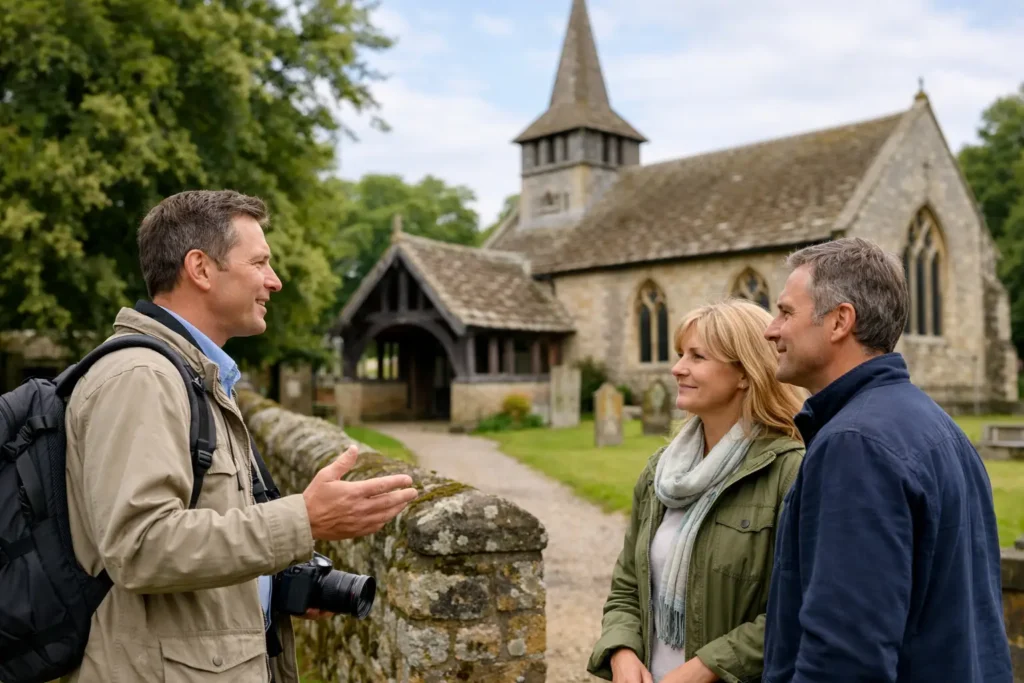
A village church can hold far more than a beautiful altar or a quiet place to light a candle. For many travelers tracing Croatian or Slovenian family roots, it is where grandparents were baptized, where marriages were recorded, where familiar surnames may still appear in parish books, and where a family story becomes wonderfully real.
So, can guides access village churches? Often, yes – but access is never something to assume. A church is first a living sacred space, not a museum or a scheduled attraction. Whether a private guide may enter with you, explain the interior, arrange a key, or request access to parish records depends on the village, the priest or parish administrator, the church calendar, and the relationship established locally.
For a heritage journey, that distinction matters. The most memorable visit is not necessarily the one with the longest commentary. It is the one arranged with care, conducted respectfully, and shaped around your connection to the place.
Can Guides Access Village Churches During a Heritage Visit?
In many Adriatic villages, a local guide can accompany guests into a church during regular opening hours or when the building is open for Mass, prayer, or a community event. Some churches are open daily. Others, especially small rural chapels and historic hillside churches, remain locked outside services to protect their art, furnishings, and historic objects.
A guide may be able to obtain access in advance by contacting the parish office, sacristan, caretaker, or municipal representative. In smaller communities, this can be a deeply personal process. The person with the key may be a longtime parish volunteer, a neighbor of the church, or a relative of someone connected to the village. An introduction made with genuine respect can open doors that a spontaneous arrival cannot.
Still, permission to enter is not always permission to conduct a full guided presentation. Some clergy welcome a discreet explanation of the church’s history. Others may prefer that interpretation happens outside, before guests enter, allowing the interior to remain quiet and devotional. Both approaches can be meaningful when handled thoughtfully.
Why Access Varies From One Village to Another
The Adriatic region is richly layered, but it is not uniform. A prominent parish church on a well-traveled island may have predictable visitor hours and staff accustomed to international guests. A small church in an ancestral inland village may operate entirely around local worship needs, with no formal tourism infrastructure at all.
Religious services are the most obvious consideration. Weddings, funerals, feast days, processions, confessions, and regular Masses all take precedence over private visits. Even when a church is technically open, a heritage group should not expect to move through the building, photograph freely, or listen to a guide while parishioners are praying.
Season also changes what is possible. Summer can bring festivals, family homecomings, and busy parish calendars to coastal villages. In winter, a priest may be responsible for several parishes and travel between them on a limited schedule. Weather can affect access as well, particularly in hill villages where older roads and stone paths are less forgiving.
There is also a practical difference between visiting a church and consulting its records. Baptismal, marriage, and burial registers may be held in the parish office, a diocesan archive, or a state archive. Access to historic records is separate from access to the church itself, and privacy rules may limit what can be viewed or copied. A well-designed roots journey plans for both possibilities without treating either as guaranteed.
The Right Way to Arrange a Church Visit
Advance planning is the difference between arriving at a locked stone door and arriving to a warm welcome. For a private heritage itinerary, the request should be made well before travel dates, especially if your visit falls around Easter, Christmas, a local patron saint’s feast day, or the summer wedding season.
The most helpful request is specific but gracious. It should explain who is visiting, why the church matters to the family, how many people will attend, and whether there is interest in a quiet visit, a blessing, a meeting with a parish representative, or historical context. If you know the names of ancestors associated with the parish, sharing them can provide meaningful context.
Privacy is equally important. For families traveling with children or several generations, a private visit may be preferable to joining a general public tour. Yet privacy does not mean exclusivity at the expense of parish life. The best arrangements work around the church’s schedule and honor the wishes of those who care for it.
At Adriatic Roots Cruises, this kind of detail is considered part of the journey’s emotional architecture. A private driver, local heritage guide, and carefully timed village visit can allow space for a church stop without rushing the moment or treating it as one more item on a sightseeing list.
What a Guide Can Add, Even When Entry Is Limited
A skilled local guide brings value well beyond access. Before you enter, they can place the church within the village’s history: when it was built, which communities worshiped there, how war, migration, empire, or changing borders shaped local life, and why a particular surname may be rooted in that valley or island.
They can also help bridge the small but important cultural details that make a visit feel natural rather than intrusive. In some churches, modest dress is expected. Hats may be removed, shoulders covered, and voices kept low. Photography may be allowed only without flash, or not at all. In a small parish, it is wise to ask before lighting a candle, leaving a donation, or approaching a side chapel.
If the church cannot be opened, the experience need not be diminished. A guide may point out the cemetery where family names appear on gravestones, translate inscriptions, share the story of the bell tower, or arrange a conversation with a local resident who remembers the village’s older families. Sometimes the view from the churchyard – olive groves, a limestone ridge, the Adriatic in the distance – tells its own part of your family’s story.
When a Priest or Parish Contact Makes the Difference
In heritage travel, personal connection often matters more than formal procedure. A parish priest may be able to explain whether records survived, whether an older church was rebuilt, or whether a cemetery has a separate burial register. A caretaker may recognize a family name immediately. These exchanges cannot be manufactured, but they can be approached with patience and proper local etiquette.
It is wise to keep expectations open. Clergy and parish staff have responsibilities that come before visitor requests, and many serve more than one village. They may not speak English fluently, have time for a lengthy meeting, or have immediate access to archival materials. A guide who understands the local language and customs can make communication easier while protecting everyone from awkward assumptions.
A small donation is often appropriate when a church has been opened specially or when a parish representative has given time to your family. It should be offered quietly and without fanfare. The gesture recognizes that these spaces are maintained by real communities, often with modest resources and great devotion.
Building Church Visits Into a Thoughtful Itinerary
The best church visit is rarely scheduled down to the minute. Allow room for the unexpected: a conversation in the square, a parish office that opens later than anticipated, a local feast that changes the rhythm of the day, or an invitation to return after Mass.
For travelers arriving by private yacht or boutique ship, this is especially valuable. A tailored land day can begin at a coastal port, continue inland to an ancestral village, and include time for a church visit, cemetery walk, family-style lunch, and a stop at the home or landscape tied to your story. Comfort remains part of the experience, but it serves something more lasting than convenience.
If a church visit is central to your journey, share that early in the planning process. Provide the village name, parish if known, ancestral surnames, approximate dates, and any documents or photographs that may help establish the connection. The more context a local team has, the more carefully they can pursue the right introductions and create alternatives if access is unavailable.
A village church does not need to be grand to be profound. Whether you step inside beneath its worn stone arches or stand quietly outside its gates, the visit can become a moment of recognition – a place where your family’s past feels close enough to touch.