A map can tell you where your grandparents were born. It cannot tell you how the village smells after rain, what the church bells sound like across a stone square, or why a family recipe tastes different when shared near the coast that shaped it. Adriatic cruises offer a rare way to pair the beauty of Croatia and Slovenia with a more personal kind of return: one designed around your story.
For travelers with roots in this part of Europe, a cruise should be more than a beautiful route between postcard ports. It can be the elegant framework for meeting relatives, visiting an ancestral parish, walking through a hometown your family left generations ago, and returning each evening to exceptional comfort on the water. The difference lies in the planning. A meaningful journey leaves room for the unexpected while ensuring every detail feels considered.
Why Adriatic Cruises Feel So Personal
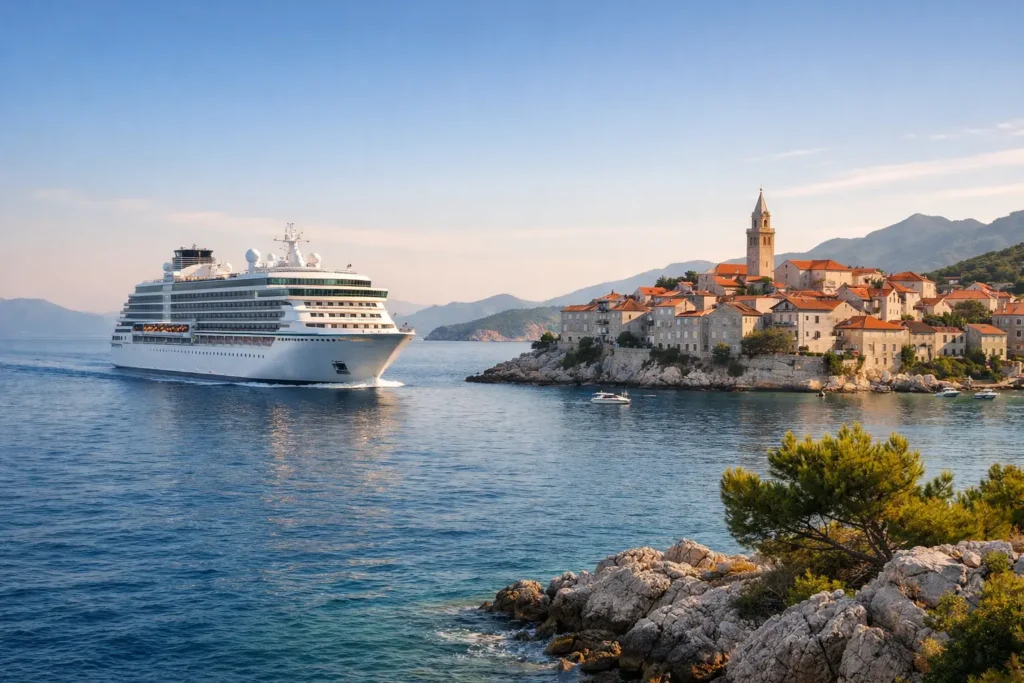
The Adriatic is unusually well suited to a private, heritage-centered journey. Its coastal cities, islands, fishing villages, vineyards, and inland communities sit close enough together to create a rich itinerary without the constant rush of changing hotels. You may wake beneath the walls of Dubrovnik, spend an afternoon in a quiet Dalmatian village tied to your family name, and dine aboard your yacht as the coastline turns gold at sunset.
That proximity matters when the journey includes family history. Many ancestral places are not major tourist stops, and that is often precisely their appeal. A custom itinerary can combine celebrated places such as Split, Hvar, Korčula, and Dubrovnik with the smaller towns where family stories began. In Slovenia, a private route might extend from the coastal charm of Piran into the Karst region, the wine country, or a village connected to a grandparent’s past.
Cruising also gives families a graceful way to travel together. Grandparents can share the places they remember from childhood stories; adult children can enjoy private guides, swimming coves, and fine dining; younger family members can encounter their heritage through food, music, and real conversations rather than a history lesson. Everyone has space, yet the experience remains shared.
Private Yacht or Boutique Ship: The Right Setting for Your Story
Not all Adriatic cruises create the same experience. The best choice depends on the size of your group, your preferred pace, and how much flexibility your heritage plans require.
A private yacht offers the highest degree of freedom. It is particularly compelling for families, couples, or close groups who want to adjust the day around a village visit, a long lunch at a family-run konoba, or an unplanned stop in a quiet bay. Your vessel becomes a private home on the sea, with a crew that understands your preferences and an itinerary that can respond to the moment.
A boutique ship can be a wonderful fit for travelers who appreciate a more social atmosphere and polished service while still seeking a smaller-scale alternative to a large cruise line. The trade-off is that port times and routes are generally more structured. For a journey centered on specific family locations or private appointments, additional land arrangements may be needed to make the experience fully personal.
For some travelers, the ideal answer is a combination. A few nights aboard a yacht may be followed by a stay in a historic city hotel, a countryside estate, or a coastal villa. This creates time for a deeper inland visit without sacrificing the pleasure of life on the water.
What a Heritage-Led Itinerary Can Include
A roots-based cruise begins with listening. Before choosing ports, it helps to understand what you already know: family surnames, towns of origin, old photographs, immigration documents, recipes, religious traditions, and stories passed down at the table. Even a small clue can shape a deeply moving day.
Genealogy research, when desired, can help identify family villages, church records, cemeteries, and local archives before departure. It is not always possible to confirm every branch of a family tree, especially when records are incomplete or names have changed across generations. Yet the process often reveals meaningful context: the landscape your ancestors knew, the trades they practiced, and the communities that carried their language and customs forward.
On the ground, the experience can be intimate rather than formal. You might meet a local historian who can explain a town’s past, attend a private tasting featuring regional dishes, or visit a parish where generations of a family marked baptisms and marriages. If relatives are still in the region, a thoughtfully arranged gathering can become the emotional center of the trip.
The journey should also make room for pleasure. A morning in a family village may be followed by an afternoon swim in the Pakleni Islands. After exploring Diocletian’s Palace with a private guide, you might enjoy a chef-led dinner featuring Dalmatian olive oil, local seafood, and wines from nearby islands. Heritage has greater resonance when it is experienced through all the senses.
A Sample Rhythm Along the Croatian Coast
Imagine beginning in Split, where a private guide introduces the layers of Roman, Venetian, and Croatian life woven into the old city. From there, your yacht carries you south through islands known for lavender fields, hidden coves, medieval lanes, and vineyards.
One day is reserved for the place that matters most to your family. A driver and local guide take you inland to a village, perhaps with time to visit the cemetery, parish church, or family home if access can be arranged respectfully. The schedule is intentionally unhurried. There is time to sit in the town square, listen, ask questions, and let the place become real.
The next day, the pace shifts. You sail to a quiet anchorage, enjoy lunch on deck, and go ashore for an evening in a walled island town. By the time you reach Dubrovnik, the journey has held both discovery and ease. It has not asked you to choose between meaningful travel and luxurious travel.
Details That Turn a Beautiful Cruise Into a Lasting One
Luxury is not simply a larger suite or a better wine list, though both have their place. On a heritage journey, luxury is the confidence that the right people have considered the details you would not want to manage from home. It is a guide who knows when to share history and when to give your family privacy. It is a driver waiting after an emotional visit, a preferred dish remembered at dinner, and accommodations suited to every generation traveling with you.
Timing deserves special attention. July and August bring brilliant weather and lively coastal energy, but popular ports can feel busy and temperatures can be high. May, June, September, and early October often offer a more relaxed rhythm, warmer local interaction, and beautiful conditions for walking through villages and historic centers. If your trip centers on a particular family gathering, religious feast, or harvest season, those dates may matter more than the traditional cruise calendar.
It also helps to be realistic about distance. Croatia’s coast looks compact on a map, but a family village may be several hours inland or involve narrow roads and limited services. A well-designed itinerary does not try to fit every meaningful location into one week. Choosing a few places and allowing time to experience them well is usually more rewarding than collecting stops.
Begin With the Questions Only Your Family Can Answer
The most memorable Adriatic journey often starts long before you board. Gather the stories you have. Ask relatives about names, places, letters, photographs, and traditions that might point toward a particular region. Decide what you hope to feel when you arrive: connection, celebration, understanding, or simply the pleasure of seeing where your family story began.
From there, a custom cruise can be shaped around the people traveling, the places that matter, and the level of privacy you prefer. The Adriatic is spectacular on its own. But when its islands, villages, and coastlines become part of your own family narrative, the journey stays with you long after the ship has left the harbor.