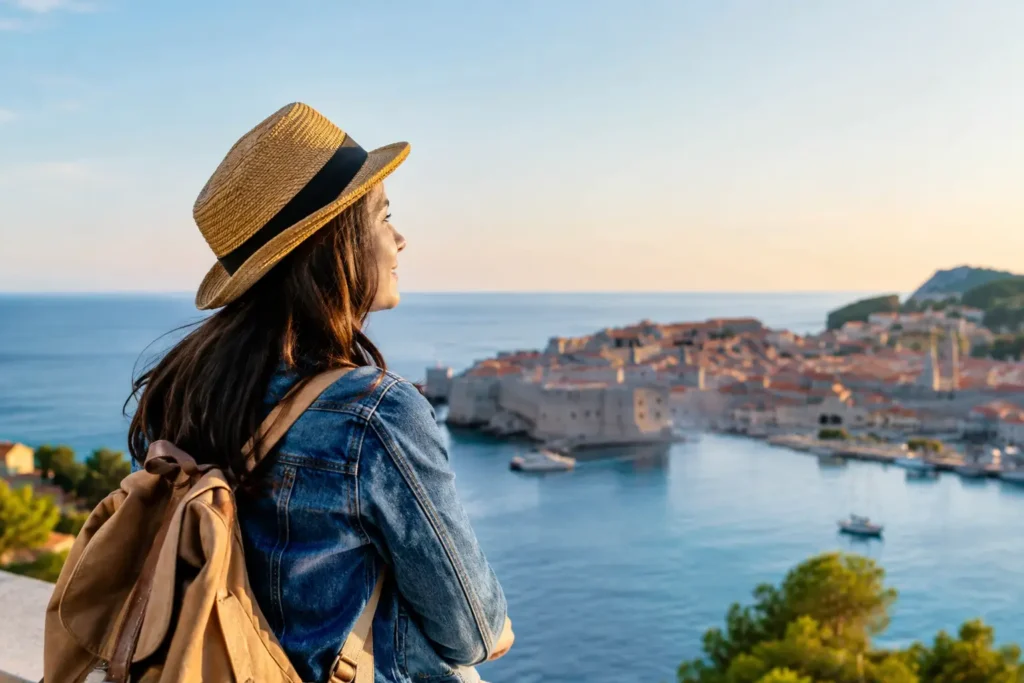
A sunlit harbor in Split may be the image that first calls someone back to Croatia. Yet for many Croatian Americans, the moment that stays with them is quieter: standing outside a stone family home, hearing a village name pronounced as their grandparents said it, or sharing lunch with a relative they had only known through old photographs. Croatian diaspora travel trends are increasingly shaped by those moments. The journey is no longer simply about seeing the coast. It is about understanding where a family story began.
For affluent travelers with Croatian, Slovenian, or Dalmatian roots, that shift has changed what a meaningful vacation looks like. They still want the clear water, exceptional wines, historic cities, and beautiful hotels. But they want these pleasures arranged around something more personal: their surname, their family’s village, a milestone birthday, or the chance to bring several generations together in the place that connects them.
Croatian Diaspora Travel Trends: From Roots to Relationships
The traditional first trip to Croatia often followed a familiar route: Dubrovnik, Split, Hvar, perhaps Plitvice Lakes, all framed by a larger European vacation. That itinerary remains appealing, especially for first-time visitors. What is changing is the purpose behind the trip.
Many diaspora travelers now arrive with a more focused question: Where did my family live, work, worship, and leave from? Sometimes the answer is found in a coastal town known to the family. Other times, it is an inland village, an island cemetery, a parish archive, or a name on a century-old house registry. The desire is not to recreate the past perfectly. It is to give that past a place in the present.
This has made travel more intentional and more private. Rather than joining a large group excursion with a fixed schedule, families are choosing journeys designed around their own pace. A couple may spend two unhurried days on Korčula tracing a grandparent’s origins, then sail to Hvar for a vineyard lunch and a quiet evening aboard a private yacht. A multigenerational family may combine Zagreb, a Slovenian ancestral region, and the Dalmatian coast, with enough room in the schedule for stories, rest, and spontaneous discoveries.
There is also a growing recognition that heritage travel is emotional. A village visit can be deeply moving, but it can also bring uncertainty when records are incomplete or family memories conflict. The most thoughtful itineraries leave space for both. They treat genealogy as a meaningful thread, not a performance with guaranteed answers.
Luxury Is Being Defined by Privacy and Access
For this audience, luxury increasingly means freedom from compromise. It means waking in a beautiful stateroom or villa without needing to pack and repack each morning. It means traveling between islands by private yacht rather than working around ferry timetables. It means a trusted local guide who can provide context, translate when needed, and know when a family would rather have a quiet moment alone.
A private Adriatic cruise is especially well suited to a roots-based itinerary because it connects celebrated coastal destinations with smaller places that large ships cannot approach with the same ease. One day might begin with a swim in a secluded bay and end in a family village above the sea. Another might pair a private walk through Dubrovnik’s old city with a dinner centered on dishes that echo a family’s regional cooking.
The appeal is not only comfort. It is continuity. Travelers can unpack once, settle into the rhythm of the water, and allow each destination to feel like part of one unfolding story rather than a checklist of separate stops.
At the same time, private cruising is not the right answer for every heritage journey. If a family’s roots lie in northern Croatia, inland Slovenia, or a remote continental village, land travel deserves equal attention. The strongest itineraries do not force every experience onto the coast. They combine a graceful sea journey with carefully planned overland days, selecting the setting that serves each part of the story best.
Multigenerational Travel Is Becoming a Legacy Experience
A notable part of Croatian diaspora travel is the rise of the multigenerational journey. Grandparents who grew up hearing Croatian at home are bringing adult children and grandchildren to see the places that shaped the family long before anyone moved to the United States.
These trips often carry a sense of timing. A family may be gathering after a wedding, a retirement, or a significant anniversary. They may want an older relative to revisit a hometown while travel is still comfortable. They may simply recognize that family history is easier to pass along when everyone is standing in the landscape where it happened.
The planning must honor different needs without diluting the experience. Younger travelers may be eager for kayaking, swimming, and lively island evenings. Parents may want private guides, exceptional dining, and a relaxed pace. Older family members may value easy access, comfortable transportation, and time to speak with locals or visit a churchyard. A tailored itinerary can hold all of this together.
The difference is felt in the details. Instead of arranging a generic walking tour, a guide can lead a family through the neighborhood where their ancestor once lived. Instead of booking a restaurant merely for its view, a host can arrange a meal built around regional specialties and family-style conversation. Instead of rushing through a village in an hour, travelers can have the afternoon to meet relatives, visit a cemetery, or simply sit in the square and take in what the moment means.
Travelers Want Cultural Depth Without Giving Up Ease
The demand for authenticity does not mean travelers are looking for hardship. Most want cultural access paired with excellent service, thoughtful pacing, and polished accommodations. They want to taste peka in a konoba that locals genuinely love, but they also want a beautifully prepared table, reliable transportation, and someone who has considered every transition.
This is where generic packages often fall short. They may include famous sights but leave little room for family-specific stops, regional nuance, or the unplanned conversations that make a heritage trip memorable. A large group tour can be efficient, but efficiency is not always the same as meaning.
Personalization matters most when a trip crosses borders and identities. Croatian family histories frequently extend beyond present-day Croatia, into Slovenia, Bosnia and Herzegovina, Italy, Austria, or other parts of the former Austro-Hungarian and Yugoslav worlds. A surname may have changed spelling. A birthplace may appear under a historic name. A family may identify deeply with a Dalmatian island while having relatives in Zagreb or Ljubljana.
A well-designed journey acknowledges these layers with care. It avoids oversimplifying identity and allows travelers to encounter the region as their family might have known it: complex, local, and deeply human.
Planning a Journey Around Your Own Story
The most rewarding heritage journeys usually begin well before departure. Travelers benefit from gathering what they already have: family names, possible villages, immigration documents, old letters, church records, photographs, and stories passed down at the table. Even small details can be useful. A remembered patron saint, an approximate departure year, or the name of a nearby town may help shape the route.
From there, the planning should establish priorities. Is the central goal to visit an ancestral village? To reconnect with living relatives? To introduce children to Croatian culture? Or to celebrate a family milestone in extraordinary surroundings? There is no wrong answer, but knowing what matters most prevents the itinerary from becoming overly ambitious.
A heritage-focused specialist can then balance research and logistics with the pleasures that make travel restorative. At Adriatic Roots Cruises, that can mean pairing genealogy-oriented exploration with private coastal cruising, local guides, elegant accommodations, and experiences chosen for the family rather than pulled from a standard template.
The best itinerary also protects time. A visit to a place of family origin should not be wedged between two major transfers and a dinner reservation. Give it room. Let the day include a leisurely lunch, a conversation with a local guide, or an unscheduled walk down a lane that looks unexpectedly familiar.
Croatian diaspora travel is moving toward a more personal kind of luxury: one measured not only by where you stay, but by what you carry home. When a journey is designed around your roots, even a small detail – a family name on a headstone, a recipe shared over lunch, a view from a village above the Adriatic – can become part of the story your family tells next.