A meaningful ancestry cruise review begins with a question that has little to do with the ship: will this journey bring you closer to the places, people, and stories that shaped your family? For travelers with Croatian, Slovenian, Dalmatian, or wider Adriatic roots, the right voyage can do exactly that. It can replace a hurried stop at a birthplace with the rare experience of standing in an ancestral village, hearing its local rhythms, and sharing the moment with the people you love.
That distinction matters. A conventional cruise may introduce you to beautiful ports, but heritage travel asks for more time, more context, and a more personal approach. It asks how a family name traveled, what life may have looked like before emigration, and which details deserve space on a once-in-a-lifetime journey.
What Makes an Ancestry Cruise Different?
An ancestry-focused cruise is not simply sightseeing with a family tree in hand. At its best, it blends the pleasure of private Adriatic sailing with carefully researched experiences on land. One day may take you through the stone lanes of Split or Dubrovnik; the next may be centered on a small island village, a parish archive, a cemetery, or a family home that has remained part of local memory.
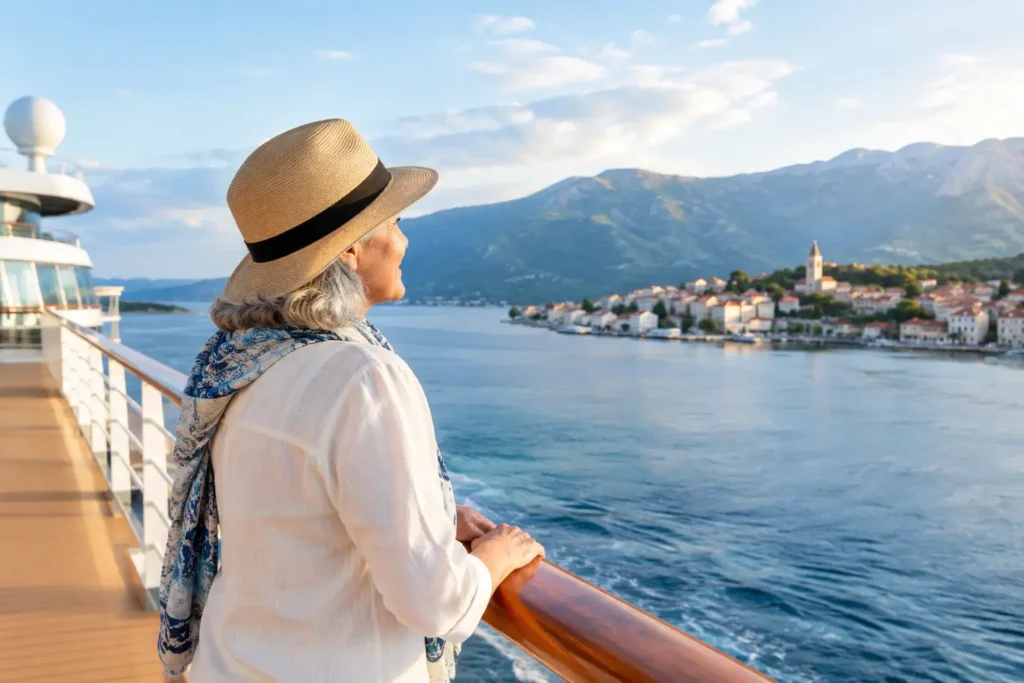
The cruise element gives the journey an elegant rhythm. Rather than unpacking at every stop or spending long hours on major roads, you return to a beautifully appointed yacht or boutique ship at the end of each day. The Adriatic itself becomes part of the experience: breakfast in a quiet harbor, a swim beneath the limestone coast, dinner on deck after a private guided walk through a historic town.
For multigenerational families, this balance is especially valuable. Grandparents can share stories in comfort, adult children can enjoy cultural depth without managing logistics, and younger family members can connect with their heritage through food, landscapes, music, and the simple adventure of being together at sea.
An Ancestry Cruise Review: What to Look For
Not every itinerary marketed as heritage travel provides true personal connection. When evaluating an ancestry cruise, look beyond the destination list and ask how the journey is built around your family story.
Research that begins before you arrive
The strongest experiences start well before embarkation. A thoughtful travel designer will ask for family names, villages, immigration records, photographs, oral histories, and the details that may seem small but often lead to the most meaningful discoveries. Perhaps your grandmother remembered a church bell, a nearby island, or a surname spelled differently after arriving in America. Those clues can shape the research and the route.
Genealogy research has limits, and expectations should remain realistic. Records may be incomplete, villages may have changed names, and a former family home may no longer be standing. Yet even when a direct document or living relative cannot be found, local context can be profoundly moving. Visiting the parish where generations worshipped, seeing the fields that sustained a family, or understanding why people left can bring a family narrative into sharper focus.
Time where your story actually happened
Generic cruises tend to measure value by the number of ports included. Heritage travel should measure value differently: by whether there is enough time to be present.
A rushed two-hour visit to an ancestral town can feel like a box checked. A private day with a knowledgeable local guide has room for the unexpected. You may pause at a cemetery to read inscriptions, accept coffee from a resident with a shared surname, or linger over a regional lunch while learning about customs your own family may have carried overseas.
This is why a fully customized itinerary is often worth considering. Your family village may be inland rather than directly on the coast, or it may require a slower drive through an area unfamiliar to large cruise operators. A private journey can accommodate that reality without sacrificing the ease and pleasure of the sea.
Guides with local knowledge and sensitivity
The best guides do more than recite dates. They understand local history, social traditions, regional dialects, and the emotional nature of a return-to-roots visit. They know when to provide context and when to step back so your family can absorb a moment privately.
This sensitivity is particularly important at ancestral homes, cemeteries, and religious sites. These are living communities, not museum displays. A well-planned visit respects current residents, local customs, and the fact that heritage is personal on both sides of the Atlantic.
Luxury that supports the experience
Luxury is not separate from meaning. It creates the space to experience meaning well. Private transfers, flexible timing, gracious accommodations, and exceptional dining remove the friction that can distract from a family-focused journey.
A smaller vessel also changes what is possible. It can access quieter harbors and islands that larger ships cannot reach, while offering privacy after emotionally full days ashore. If your family wants to gather for a celebratory dinner, revisit the day’s discoveries over Croatian wine, or simply enjoy a peaceful sunset together, the setting matters.
The Trade-Offs to Consider
A heritage cruise is not the right choice for every traveler, and an honest review should acknowledge the trade-offs. Custom research, private touring, and smaller luxury vessels generally cost more than an off-the-shelf Mediterranean sailing. The value lies in the work behind the scenes and the flexibility on the ground, but travelers should decide whether personal access and tailored pacing are priorities.
There is also a practical balance between discovery and certainty. Some guests hope to meet relatives or uncover a precise ancestral address. Those outcomes are possible, but they can never be guaranteed. The most rewarding travelers arrive with curiosity rather than a fixed script. They allow the journey to reveal not only names and dates, but also the culture and landscape behind their family history.
Pacing deserves careful thought as well. A family may be tempted to include every port from Venice to Dubrovnik, plus ancestral stops in Slovenia, Istria, Dalmatia, and the islands. Yet a more selective route often creates a richer experience. Two unhurried days connected to your roots can be more memorable than five rapid excursions.
A Journey Designed Around Your Story
Imagine beginning in Slovenia, where a private guide introduces the architecture, cuisine, and Alpine-Adriatic influences of the region connected to your family. From there, your route may move south through Istria and along Croatia’s coast, with time in historic cities as well as smaller communities that conventional itineraries overlook.
A day in an ancestral village might begin with a visit to the parish church or local cemetery, followed by a conversation with a historian who can place your family within the area’s wider story. Afterward, you might share a home-style lunch featuring recipes familiar in spirit, if not in exact form, to meals your ancestors knew. By evening, you return to the water, where the pace softens and the coast unfolds outside your suite.
For a milestone birthday, anniversary, or family reunion, these moments become more than a vacation album. They give families a setting for stories that may otherwise remain scattered across old documents and dinner-table memories. At Adriatic Roots Cruises, the goal is not to fit your history into a predetermined route. It is to create a refined journey around the places and experiences that matter to you.
Who Will Find It Most Rewarding?
An ancestry cruise is especially compelling for travelers who want privacy, cultural depth, and time to connect. It suits families whose heritage research has reached a point where names on a page deserve a real-world context. It also works beautifully for couples who want a sophisticated Adriatic escape with a more personal purpose than standard sightseeing.
You do not need a complete family tree to begin. A surname, a town of origin, an old photograph, or a grandparent’s recollection can be enough to shape a meaningful starting point. The essential ingredient is the desire to understand where your story began and to experience that connection with care.
The most lasting part of a heritage journey may not be the document you find or the harbor you photograph. It may be the conversation that happens afterward: a grandchild asking about a great-grandparent, siblings comparing memories, or a family deciding which story they want to carry forward. Give those moments time, and your return to the Adriatic can become part of your family’s story too.