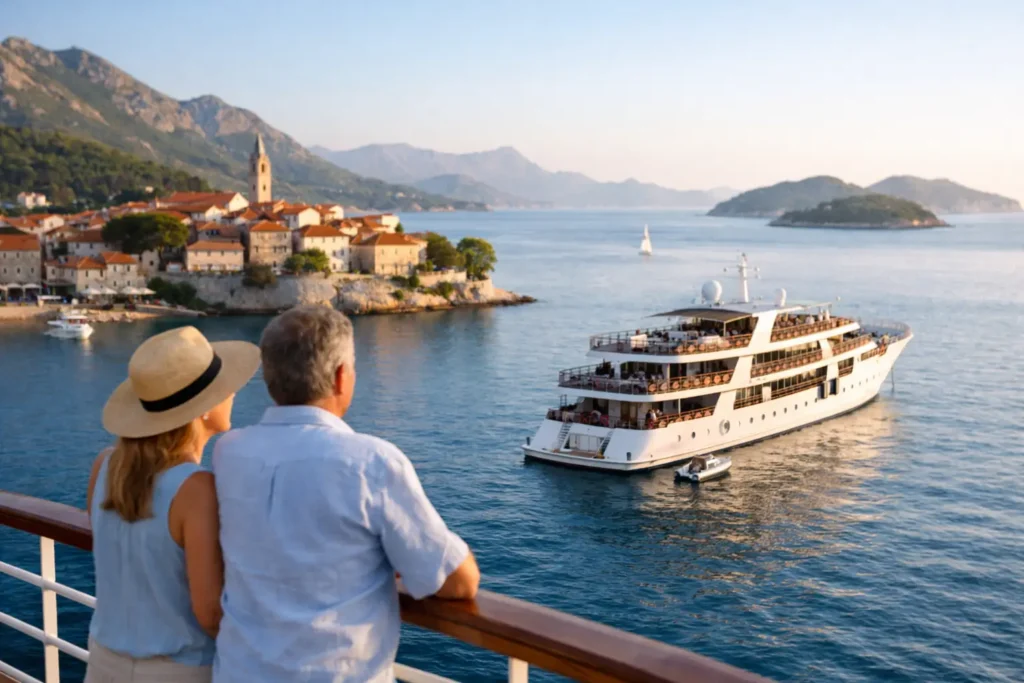
A large cruise ship can show you the Adriatic. A smaller vessel can bring you close enough to feel its rhythm: the bell tower above a quiet harbor, the olive groves beyond a family village, the fisherman who remembers a surname. This Adriatic small ship guide is for travelers who want privacy and polish, certainly, but who also want their time on the water to lead somewhere personal.
For families with Croatian or Slovenian roots, the sea is often more than a beautiful route between ports. It is the thread connecting places that once felt distant: a grandparent’s island, a stone house in a hillside village, a family recipe still prepared in a local konoba. Choosing the right small ship makes room for those moments without sacrificing the comfort, service, and ease of a truly refined vacation.
Why a Small Ship Changes the Adriatic Experience
The Adriatic coast is made for intimate cruising. Croatia alone has more than a thousand islands, with sheltered coves, medieval towns, and smaller ports that are simply not designed for the scale of a conventional cruise ship. On a boutique vessel or private yacht, mornings can begin in a calm bay and end within walking distance of a historic town center.
That access changes the pace of a journey. Rather than following a fixed parade of large-ship stops, you can linger over lunch in Korčula, swim before breakfast near the Pakleni Islands, or alter the afternoon plan when a local guide suggests a less-visited chapel, vineyard, or village market. The greatest luxury is not only a beautiful cabin. It is having time that still feels like your own.
For heritage travelers, flexibility is especially valuable. An ancestral village may require a detour inland from Split, Šibenik, Dubrovnik, or a smaller Dalmatian port. A well-designed voyage can pair those meaningful days ashore with restorative days at sea, so family research and emotional discovery never feel rushed or overly scheduled.
Choosing the Right Type of Small Ship
“Small ship” can describe very different experiences. The right choice depends on who is traveling, how much privacy you prefer, and whether your ideal trip is centered on the water, the destinations, or both.
Private Yacht Charter
A private yacht is the most flexible option for couples, families, and groups traveling together. The itinerary, dining rhythm, swimming stops, and onboard atmosphere are shaped around your party. If your family hopes to visit a particular island, arrange a private village lunch, or spend an unhurried afternoon with relatives, a charter gives you the freedom to adjust without consulting a group schedule.
This option is particularly compelling for multigenerational travel. Grandparents can enjoy comfortable, attentive service while younger travelers paddleboard in a quiet cove or explore a fortified town with a guide. Everyone shares the journey, but each day can hold different pleasures.
The trade-off is that private charter is a more significant investment, especially during peak summer dates. Availability for the most desirable vessels is also limited, so early planning matters.
Boutique Small Ship Cruise
A boutique small ship offers the pleasure of a more social onboard setting while remaining far more personal than a large cruise. These vessels generally carry a limited number of guests, often with thoughtfully designed cabins, a sun deck, attentive crew, and a relaxed atmosphere.
This can be an excellent fit for couples, solo travelers, or families who enjoy meeting like-minded guests but still value smaller ports and a more considered pace. The itinerary is typically fixed, although private shore experiences can often be arranged around it.
The compromise is flexibility. If an unexpected family connection invites you to stay longer in a village, the ship’s schedule may not allow it. For some travelers, that is a reasonable exchange for the simplicity of a hosted voyage. For others, particularly those following a family story, a private arrangement is worth considering.
A Custom Land-and-Sea Journey
Some of the most rewarding Adriatic itineraries do not begin or end at the marina. A custom land-and-sea journey may combine a small ship cruise with private stays in Zagreb, Ljubljana, Istria, the Slovenian coast, or a family’s ancestral region farther inland.
This approach works beautifully when heritage research leads beyond the islands. You might spend several nights in Split before sailing south, visit parish records or a local cemetery with a specialist guide, then continue by sea to Hvar, Vis, Korčula, and Dubrovnik. The result is not a cruise with a few excursions attached. It is a journey designed around your story.
What to Look for in an Adriatic Itinerary
The most beautiful route is not always the most meaningful one. Popular stops such as Dubrovnik, Hvar, and Split deserve their reputations, but the best itineraries balance those iconic places with quieter islands and time ashore that has a purpose.
Consider whether you want to focus on the southern Dalmatian coast, travel between Split and Dubrovnik, or explore farther north through Šibenik, Zadar, and the Kornati islands. Northern routes tend to feel less crowded and more nature-forward. Southern Dalmatia offers dramatic historic cities, warmer late-season weather, and easy access to islands closely tied to many Croatian-American family histories.
Also consider how many port changes feel enjoyable rather than exhausting. A seven-night voyage can cover a meaningful stretch of coast, but it should not attempt to collect every famous island. Fewer stops with deeper experiences often leave a stronger impression than a daily rush from one harbor to the next.
For travelers reconnecting with roots, build in at least one day that is intentionally unscripted. A conversation with a local historian, an extended family lunch, or a walk through the landscape your ancestors knew may become the memory that defines the entire trip.
When to Sail for Comfort and Connection
July and August bring the Adriatic at its most vibrant: long sunny days, warm water, animated waterfronts, and high demand. This is ideal for families traveling around school calendars and for guests who want the full energy of the coastal summer season. It also requires careful planning, particularly for berths, guides, and sought-after restaurants.
May, June, September, and early October often offer a more relaxed experience. The water is especially inviting by June and remains warm well into September, while towns are easier to enjoy without the height of summer crowds. These months can be particularly well suited to heritage visits, when there is more space for unhurried conversation and local hosts are less pressed by peak-season demands.
Weather, of course, is part of sea travel. A thoughtful itinerary includes room to adjust for wind conditions, especially when crossing more open stretches of water. This is not a drawback of small-ship travel. It is part of traveling well: respecting the coast, the captain’s judgment, and the possibility that an alternate cove may be even lovelier than the original plan.
Make Shore Time Personal
The difference between a standard cruise and a deeply tailored one is often found on land. Private guides can bring historic cities into focus, but the most memorable experiences are usually more specific: tasting olive oil with a family producer, joining a chef for a market visit, meeting a winemaker whose vines have been tended for generations, or walking the lanes of a village connected to your family name.
Genealogy-oriented planning adds another dimension. Before departure, family records, immigration documents, surnames, and oral histories can help identify places worth exploring. Once on the ground, knowledgeable local partners can help put those clues in context. Not every record produces a dramatic revelation, and not every family home still stands. Yet even a modest discovery can feel profound when you are there, looking at the same coastline, church, or hillside that shaped generations before you.
This is where a custom approach matters. Adriatic Roots Cruises designs these details around the traveler, not around a pre-set package. The goal is not to fill every hour. It is to create the conditions for genuine connection while every practical element, from transfers to accommodations to private excursions, is carefully handled.
Questions Worth Asking Before You Book
Before choosing a vessel or route, ask how much control you will have over your days, whether the ship can access smaller ports, and what happens if weather changes the planned route. Ask about cabin layout, onboard dining, crew-to-guest ratio, tender access, and the physical demands of moving between ship and shore.
If you are traveling with parents, young children, or guests with mobility considerations, details such as stairways, dock conditions, and vehicle access deserve early attention. Luxury is personal. For one guest it means a spacious suite; for another, it means knowing a private driver will be waiting after an emotional afternoon in a family village.
The Adriatic rewards travelers who leave room for both intention and surprise. Plan for the places you have longed to see, then allow the coast to offer what no itinerary can fully predict: a familiar name on an old stone, a table set beneath vines, a story shared by someone who remembers.