A family name on an old document can lead to a village church above the Adriatic, a stone house overlooking an island harbor, or a recipe still prepared by distant relatives. To design a heritage sailing holiday is to give those discoveries the time and setting they deserve: unhurried days on the water, private encounters on land, and a journey shaped around the places that belong to your story.
For travelers with Croatian, Slovenian, or wider Dalmatian roots, a heritage voyage is not simply a cruise with cultural stops added along the way. It is a carefully paced return, where the comfort of a private yacht or boutique vessel makes space for conversations, memories, and the unexpected moments that often become the most meaningful.
Begin With the Story You Want to Follow
The strongest itineraries begin before a vessel is selected or a route is drawn. Start with what you know: surnames, birthplaces, family letters, photographs, migration records, saints’ names, or stories passed down around the table. Even a small detail can help establish a meaningful starting point.
Just as useful is identifying what you hope to feel or understand. Perhaps you want to stand in your grandmother’s coastal village, introduce children to their heritage, trace a family’s move from an inland town to America, or simply experience the landscape that shaped your family’s traditions. These goals influence every decision, from the balance of sailing and touring to how much time to spend in one place.
Not every family history leads directly to the coast. Many ancestral communities lie inland, in Istria, the Dalmatian hinterland, Zagreb, or Slovenia’s wine country. That is not a limitation. A well-designed land-and-sea itinerary can pair private inland exploration with a restorative Adriatic sailing route, allowing the journey to follow your history rather than forcing it into a standard cruise map.
Choose a Sailing Route That Leaves Room for Meaning
Croatia’s coast is rich in beautiful ports, but trying to see too much can dilute the experience. Heritage travel benefits from margin. A village visit may inspire a longer lunch with a local host. A church archive appointment may take more time than expected. A relative may invite your family for coffee, and that invitation should never feel like an interruption to a rigid schedule.
For many travelers, Split offers a natural gateway to central Dalmatia. From there, a private yacht can move among Brač, Hvar, Vis, Korčula, and the Pelješac Peninsula, while private drivers connect the coast to ancestral towns and villages. This works especially well for families whose history is rooted in the islands or in communities near Split, Makarska, Šibenik, or Dubrovnik.
Northern routes offer a different rhythm. Istria combines Venetian-influenced coastal towns, hilltop villages, truffle country, and excellent vineyards, while the Kvarner Gulf provides access to islands such as Krk, Cres, Lošinj, and Rab. For Slovenian heritage, a journey might begin in Ljubljana or the countryside before continuing to the Slovenian coast and northern Adriatic. The right route depends on geography, but also on the emotional center of your trip.
Let Research Guide the Experience, Not Overwhelm It
Genealogy can add remarkable depth, especially when it is handled with sensitivity and local knowledge. Before departure, research may help confirm places of origin, locate parish or civil records, identify cemetery sites, and understand historical name variations. In a region shaped by changing borders and languages, a name may appear differently in Croatian, Italian, Slovenian, German, or Hungarian records.
Still, a heritage journey should not become a series of archive visits. The goal is to turn information into connection. If records reveal that your great-grandfather was born near a particular island port, the itinerary might include a private guided walk through that town, a visit to the parish church, and a meal featuring the regional dishes he would have known.
There are occasions when records are incomplete or a precise family home cannot be identified. That can be disappointing, but it does not make the journey less valuable. Walking the same streets, hearing the local dialect, seeing the terrain, and understanding the community’s history can offer a powerful sense of place even without a definitive address.
Design a Heritage Sailing Holiday Around Your Pace
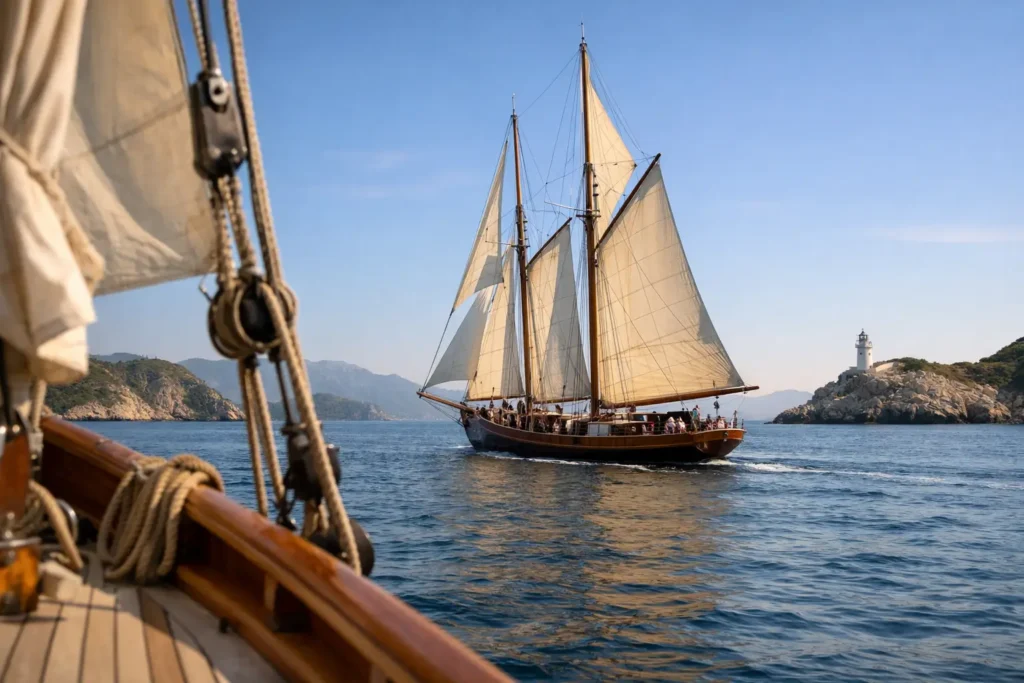
Luxury in this context is not only fine accommodation and exceptional service. It is the freedom to set the pace. A private yacht allows you to linger in a quiet cove after a moving day ashore, change course for a favorite island, or enjoy a long family dinner on deck without watching the clock.
A multigenerational group may prefer shorter sailing passages, flexible activity levels, and a mix of private guides and time at leisure. Couples celebrating an anniversary may want a more intimate rhythm, with secluded anchorages, wine tastings, and a private dinner in an ancestral region. Travelers focused on research may choose fewer islands and more carefully arranged land days.
A thoughtful itinerary also alternates emotional intensity with ease. After visiting an ancestral cemetery or meeting local relatives, an afternoon swim in clear water or a relaxed sail along the coast can create room to absorb the experience. Those quieter intervals are not empty time. They are often where a family’s stories begin to settle into memory.
Bring Local Expertise Into the Details
The difference between a pleasant visit and a meaningful homecoming is often found in the details. A knowledgeable local guide can explain why a town’s architecture reflects Venetian rule, how emigration changed island life, or why a family surname appears frequently in one valley and not the next. They can also help navigate the social grace of a first meeting with local relatives or community members.
Private access matters as well. Instead of joining a crowded group through a landmark, consider a guide who can place a UNESCO site within your family’s regional history. Rather than selecting a restaurant solely for its view, arrange a meal that reflects local culinary traditions, from Dalmatian peka to Istrian olive oil and Slovenian wines.
At Adriatic Roots Cruises, each journey is designed around these personal threads, balancing polished sailing with the local relationships and planning required to make heritage travel feel authentic rather than staged.
Create Moments Your Family Can Share
Heritage travel becomes especially powerful when it invites participation across generations. Children and grandchildren do not need a lecture on genealogy to feel connected. They may remember learning to make a regional dish, hearing a musician perform songs from the area, helping identify names in old photographs, or swimming beneath the island their ancestors once watched from shore.
Consider building in a few intentional shared moments. A family dinner near an ancestral village can be an opportunity for everyone to tell the stories they know. A private guide can tailor a walk for different ages and interests. If appropriate, a photographer can document a reunion, a village visit, or a celebration on board without turning the occasion into a performance.
It also helps to leave some experiences unplanned. The Adriatic rewards curiosity: a small market, a chapel left open in the afternoon, an elderly shopkeeper who recognizes a surname, or a quiet harbor that invites one more night. A bespoke journey should have enough structure to feel effortless and enough flexibility to welcome the unrepeatable.
Practical Considerations for a Personal Journey
The most comfortable seasons for sailing are generally late spring through early fall. May, June, September, and early October often offer warm weather, fewer crowds, and a gentler pace in historic towns. July and August bring vivid energy and long, sunny days, though popular ports are busier and advance planning becomes especially valuable.
A seven-night voyage can offer a meaningful introduction to one coastal region, particularly when family roots are close to the water. For a more layered experience involving inland villages, multiple countries, or deeper research, 10 to 14 nights provides a more relaxed and rewarding pace. The ideal length depends on your family history and how much time you want to spend simply enjoying the sea.
Share any mobility needs, dietary preferences, privacy expectations, and important family dates early in the planning process. These are not minor details. They shape the choice of vessel, accommodations, transfers, restaurant settings, and the daily rhythm of the trip.
The most enduring heritage holidays do not try to prove every fact or visit every place. They create the conditions for recognition: a coastline that suddenly feels familiar, a family story told anew, and the quiet pleasure of knowing that your roots are no longer only something you have heard about. They are somewhere you have been.