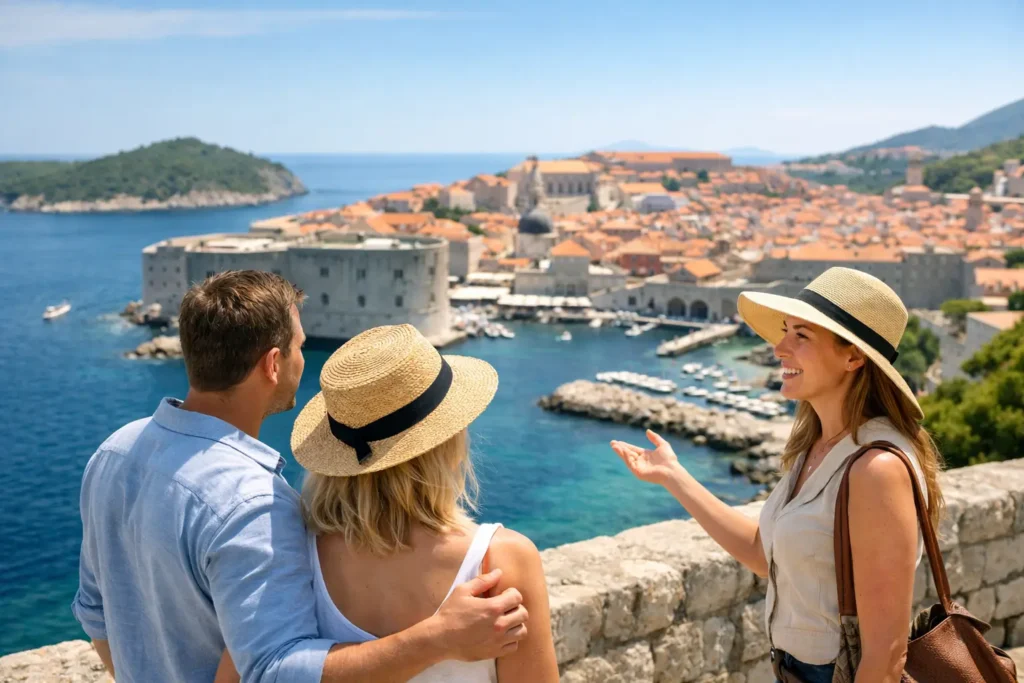
The city walls are magnificent, but for many travelers, Dubrovnik tours become most memorable when they lead beyond the familiar views. Perhaps your grandparents spoke of a village on the Pelješac Peninsula. Perhaps your family name appears in parish records outside the old city, or perhaps you simply feel drawn to the Adriatic way of life – its stone homes, olive groves, family tables, and enduring sense of place. A thoughtfully planned visit can make room for all of it, without asking you to sacrifice privacy, comfort, or time to simply enjoy the moment.
What Makes Dubrovnik Tours Feel Personal
Dubrovnik can be experienced in a few busy hours, but it should not be reduced to a checklist. The Old Town deserves its place in any itinerary: the limestone streets, Rector’s Palace, city walls, and views over the terracotta roofs are extraordinary. Yet a meaningful journey considers what those landmarks mean to you and how you prefer to experience them.
For some guests, that means entering the Old Town early with a private guide, before the midday crowds arrive. For others, it means arranging a quiet lunch overlooking the harbor after a walk through the historic center, then returning to a yacht or boutique ship rather than navigating a large cruise terminal. The difference is not merely one of comfort. It is the freedom to linger where a story unfolds and move on when it does not.
The best experiences also recognize that Dubrovnik is part of a wider cultural landscape. Its history is tied to the islands, maritime trade, rural Konavle, the vineyards of Pelješac, and family communities that have maintained local traditions for generations. A tour designed around your interests makes these connections visible.
Private Touring or a Standard Excursion?
A standard group excursion can be a sensible choice for travelers seeking a brief overview at a lower cost. It often covers the principal sights efficiently, and it may suit a first-time visitor with limited time in port. The trade-off is a fixed schedule, a shared pace, and little opportunity to follow personal interests as they arise.
Private touring is especially valuable when your time in Dubrovnik carries emotional weight. A guide can adjust the day around mobility needs, family dynamics, photography preferences, or a desire for quieter places. If you are traveling with several generations, this flexibility matters. Grandparents may appreciate a measured walking route and comfortable pauses, while younger relatives may want time on the walls or an active afternoon on the water.
For heritage-minded travelers, private access also creates space for preparation. Rather than arriving with a surname and a hope, you can begin with family details, places of origin, and records already gathered. When possible, an itinerary can include a visit to an ancestral village, a meeting with a local historian, or time in a parish or regional archive. Not every family story can be confirmed, and local records vary widely by area and era. But the process itself can turn an abstract connection into something tangible.
When Heritage Belongs in the Itinerary
Heritage travel works best when it is woven naturally into a beautiful vacation, not treated as a separate research assignment. A morning spent tracing the route of a great-grandparent may be followed by a long lunch at a family-run konoba, a vineyard visit, or an afternoon cruise along the coast. The emotional and the luxurious can belong to the same day.
A visit to Konavle, south of Dubrovnik, offers one example. Known for its countryside, traditional crafts, vineyards, and village rhythms, the region provides a different perspective from the polished grandeur of the Old Town. For a family with roots in the area, a local guide may help interpret family names, customs, and the geography that shaped earlier generations. For travelers without a documented connection, the experience still offers a more intimate understanding of southern Dalmatia.
The same principle applies to the islands. Lokrum makes an easy escape from the city, while the Elaphiti Islands invite a slower day of swimming, coastal dining, and village exploration. A private vessel gives you control over timing and atmosphere. You can choose a lively day with water activities or a quieter route built around hidden coves and a relaxed lunch ashore.
A Better Way to Shape Your Days in Dubrovnik
The most successful Dubrovnik itineraries balance the famous sites with the places that feel entirely your own. Rather than filling every hour, build in transitions: time to settle into your hotel or yacht, a late-afternoon drink after touring, an unhurried dinner, and room for an unexpected conversation with a local host.
Begin With the City Before It Gets Busy
An early private walk through the Old Town can set the tone for the entire stay. Your guide can focus on the Republic of Ragusa, Jewish heritage, maritime history, architectural details, or family connections to the region. The city walls are remarkable, but they involve stairs and uneven surfaces, so they are not ideal for every traveler. A street-level route can be equally rewarding and more comfortable for those with limited mobility.
Afterward, consider a private food experience or a refined lunch outside the busiest lanes. Dubrovnik’s dining scene ranges from formal, destination-worthy restaurants to understated family kitchens. The right choice depends on whether you are celebrating a milestone, introducing grandchildren to regional dishes, or simply looking for a memorable table with a view.
Reserve a Day for the Water
Seeing Dubrovnik from the sea changes the scale of the city. The walls rise dramatically from the coastline, and the open Adriatic offers a welcome contrast to the narrow streets within the gates. A private yacht day can include swimming near the Elaphiti Islands, a stop in Šipan or Lopud, and lunch at a waterfront restaurant where the pace is shaped by your group alone.
This is also where a custom land-and-sea itinerary becomes particularly compelling. You do not need to choose between a city stay and a cruise experience. A few nights aboard a private yacht or boutique vessel can carry you naturally from Dubrovnik to the islands, Pelješac, Korčula, or onward through the Dalmatian coast. Each destination arrives with your accommodations, your preferred level of service, and no need to repeatedly pack and unpack.
Go Beyond the Walls With Purpose
If your family roots lead outside Dubrovnik, give that day the time it deserves. Villages are not museums, and a meaningful visit should be approached with respect for residents, local customs, and the realities of modern life. A well-prepared local host can help make introductions where appropriate, arrange a visit to a church or cemetery, and add historical context without making the experience feel intrusive.
Even without a specific ancestral destination, a day in the Pelješac Peninsula can reveal another side of the region. Its vineyards, oyster farms, coastal villages, and mountain-backed roads offer a slower, more rural expression of Dalmatian life. Pairing it with a private tasting or a chef-led meal turns a scenic outing into an experience with real local character.
Timing, Pace, and the Value of Local Knowledge
Dubrovnik is most crowded from late spring through early fall, particularly when large ships are in port. That does not mean you should avoid summer entirely. It means your day should be intelligently timed. Early starts, late-afternoon touring, private transfers, and reservations made well ahead can preserve a sense of ease even during popular periods.
May, June, September, and early October often offer an appealing balance of warm weather and a less intense atmosphere. July and August are ideal for travelers whose priority is swimming and island life, though they require more careful planning. Winter brings a quieter city and a more local rhythm, but some island and seasonal experiences are limited.
At Adriatic Roots Cruises, planning begins with the questions that generic tours rarely ask: What stories have been passed down in your family? Which places matter most? Who is traveling, and what would make each person feel cared for? Those answers shape everything from the guide you meet to the table reserved for your final evening.
A Dubrovnik journey is not measured by how many landmarks you cover. Leave space for the view from the water, the name on an old stone, the meal that becomes a family story, and the feeling that a place once distant now belongs to you in a more personal way.